The certifications awarded to RMC convey our commitment to sustainability.
They show that we consider environmental and occupational health and safety aspects in all our operations and fulfil requirements as set by the recognised standards.
The certification requirements extend to all areas of operations, from vessel design to construction, as well as management and leadership. Being granted the certifications also means that we have a plan to continuously improve operations moving forward.
We use a Whistleblowing Channel as a tool to maintain ethical principles and trust.
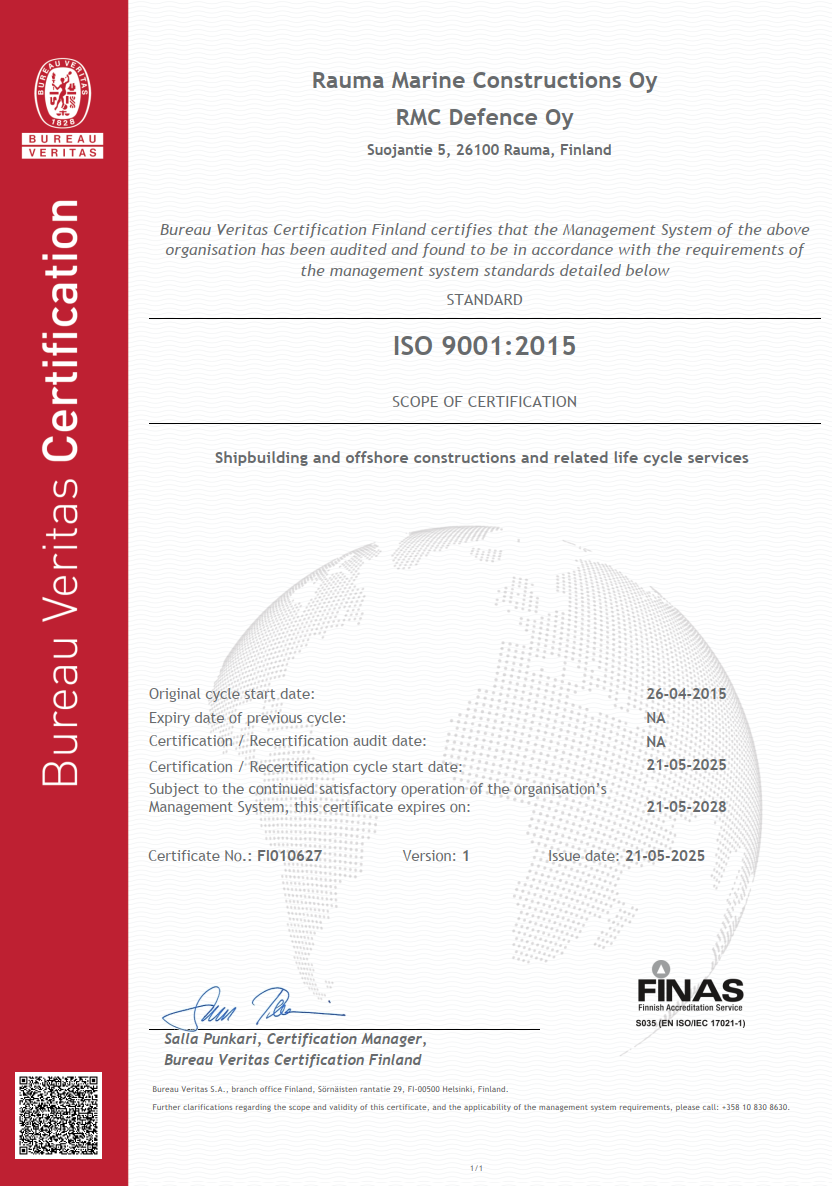
Quality management at RMC is based on customer-centricity, management and leadership, processes, employee engagement, continuous improvement and relationship management. These focus points guide how RMC operates with customers and other stakeholders. Moreover, as stated in the ISO 9001:2015 standard, risk management is essential in not only quality management, but across the company’s entire management system.
Fulfilling – and, at best, exceeding – customer expectations in projects is crucial for business. Success is enabled by good management and committed personnel. RMC taps into seasoned experts as well as new modes of thinking. To maintain a high level of quality, we develop and standardise processes.
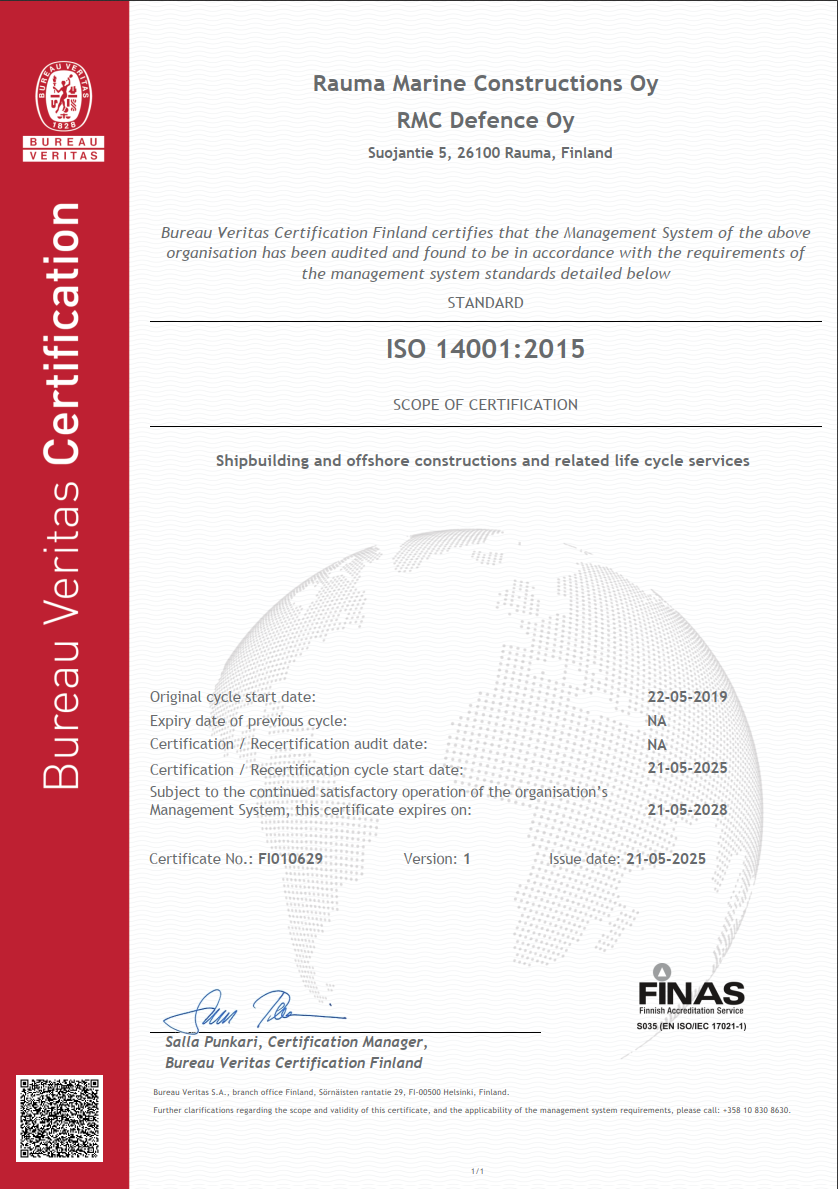
Our environmental management system is a set of processes and practices that systematically improve the management and outcome of environmental protection at RMC. The ISO 14001 system helps us to further accelerate our environmental protection measures. Energy-efficient solutions are at the core of modern shipbuilding and crucial to operating a ship. Our customers expect new ships to be environmentally friendly, energy efficient and equipped with the latest, high-performance technology.
RMC wants to be a forerunner in using and creating increasingly environmentally friendly technology. Decreasing the size of our product’s environmental impact is important to us. We strive to use advanced, fuel-efficient concepts, and each ship that we build, or service, is more eco-efficient than its predecessor. Furthermore, we want to take energy-efficient and environmentally friendly solutions forward and emphasise eco-efficiency throughout the value chain.
For example, the new Wasaline ferry, built by RMC for Kvarken Link, is thus far the most environmentally friendly vessel in its class. It is the first RoPax ferry in the world with a Clean Design class mark. The vessel’s primary fuel is liquefied natural gas (LNG). In addition, the new ferry can use locally produced biogas, and batteries supply power for propulsion during entry and exit to and from ports.
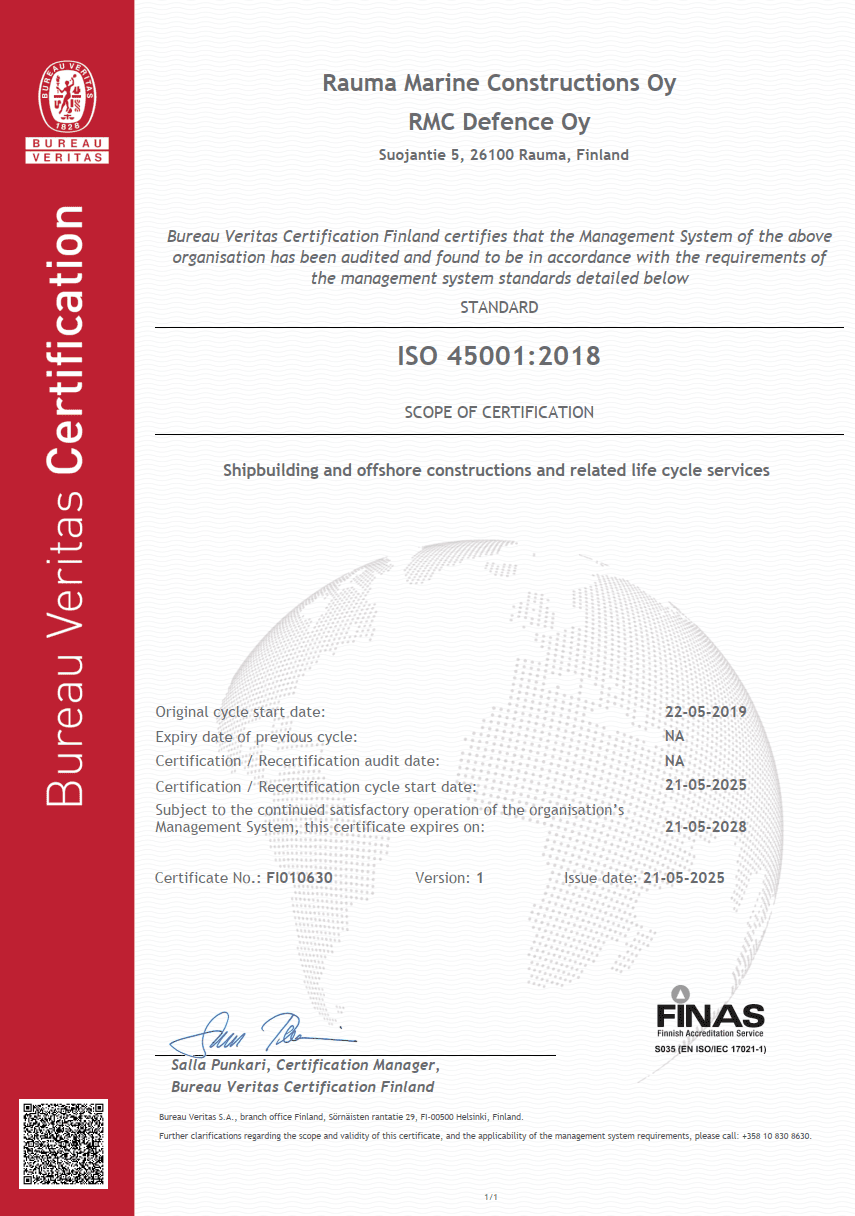
RMC uses the ISO 45001 system to promote the health and safety of employees, reduce workplace risks and create healthier, safer working conditions. The standard emphasises:
- the commitment of top management
- employee engagement
- risk management and tapping into opportunities for improvement
- integrating health and safety into the organisation’s business processes
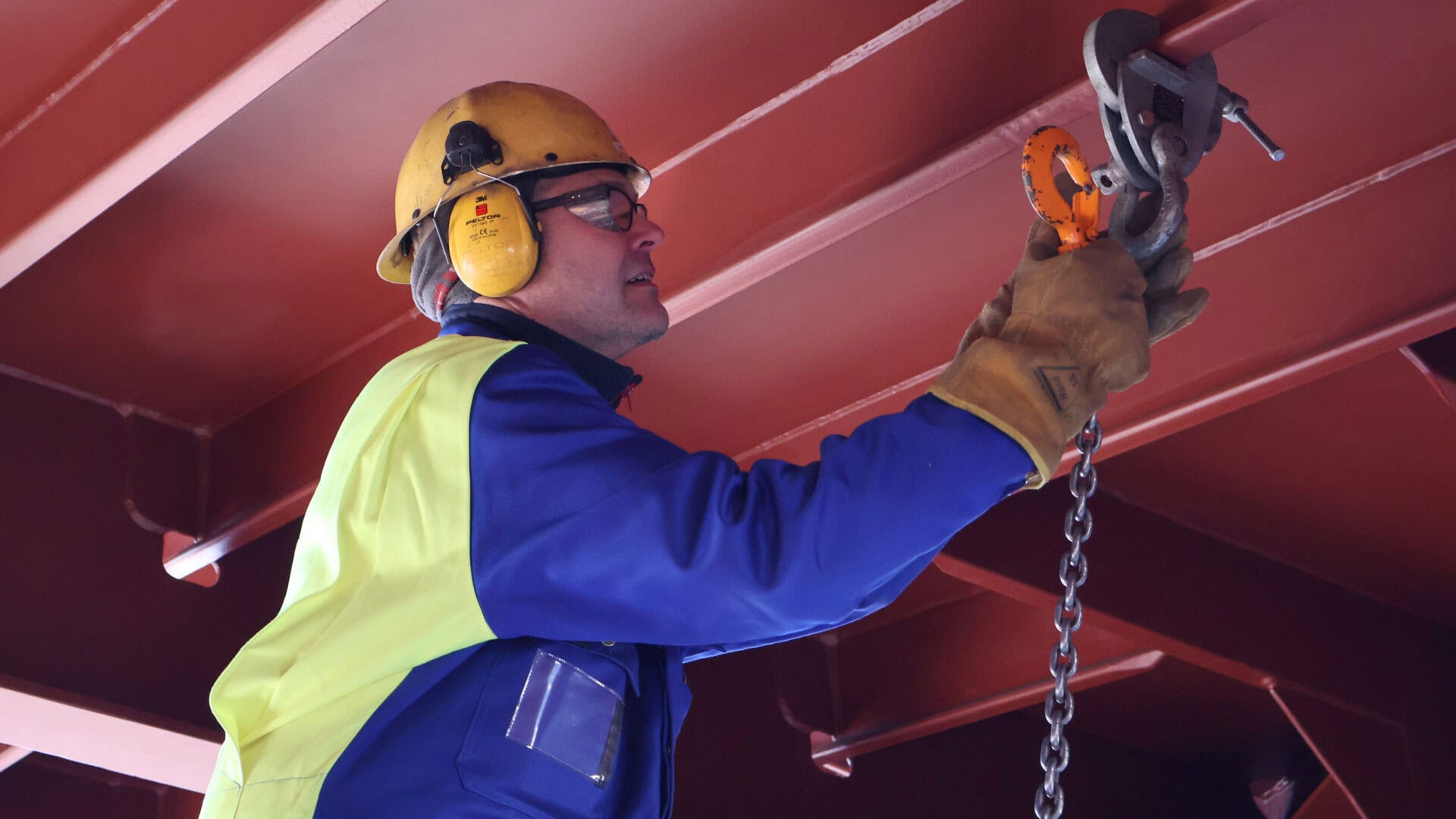
Everyone has the right to a healthy and safe workplace. Occupational safety concerns not only people but also the environment and the premises. It is important that we can all work peacefully in a safe environment.
Occupational safety is a prerequisite for preventing accidents and safeguarding and maintaining the personnel’s ability to work. Anticipation and risk management are essential to occupational safety. Ensuring safe premises, safe equipment and a safe environment is a joint effort.
RMC’s safety practices include safety walks, risk assessments and reporting of safety observations and near-miss events. These procedures allow us to further improve working conditions and eliminate or reduce risks. For example, in order to prevent accidents and close calls from the start, it is essential that new employees are introduced to the characteristics of the shipyard environment. RMC’s management team receive regular reports on occupational health and safety. Moreover, we organise trainings for personnel who need a hot work permit, an occupational safety card or education in first aid skills.